Since beginning my career in Strength and Conditioning and Sport Science industry back in 2008, I have been in the fortuitous position to have worked with elite athletes across a wide variety of sports. These experiences alongside my academic studies, peer reviewed research and professional development have provided me with a unique skill set in the application of running conditioning for both endurance and team sport athletes.
Exactly one year ago amidst one of Melbourne’s COVID lockdowns, I decided to setup a “side business” – The Conditioning Consultant (TCC) – using the aforementioned experiences and knowledge. The primary aim of creating TCC is to make scientifically based training principles more accessible to weekend warriors and sub-elite athletes, with the aim of improving performance across wide variety of events, sports and physical qualities.
Pleasingly the engagement and uptake of TCC’s running programs has been fantastic and has provided me with terrific insight into the training habits of endurance runners. I have summarised the most common training mistakes that runners make in the infographic below for Melbourne Podiatry Clinic. This follow up blog post should provide greater clarity regarding these common mistakes.
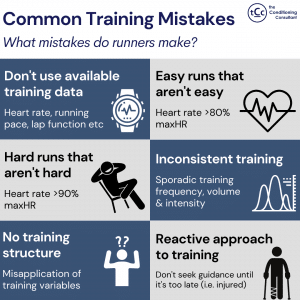
1. Don’t use available training data
The vast majority of runners have access to insightful (and expensive) technology, most notably in the form of GPS watches. However, most runners very rarely use the technology appropriately to positively guide training sessions and maximise physiological adaptations. Both heart rate and running pace are readily available on almost every single GPS watch, however there is a lack of understanding as to how to use them to guide your running sessions.
Pace (min/km) – When completing interval type sessions, most runners do not actively use the lap function, rather they just rely on the 1km “auto lap” function that comes as the default setting on most watches. The lap function can be used manually by pressing the lap button or it can be automated via pre-programming the sessions and laps onto the watch. The major benefit of “lapping” interval sessions is that it enables runners to obtain an accurate average pace for the specified work period, which can then be cross referenced with what has been prescribed. Runners that do not lap their sessions and simply use the 1km auto function are running blind and will not be able to adjust their running speed to accommodate the program and session goals.
Heart rate (bpm) – Heart rate data is utilised even less than the lap function by most runners, and this is particularly concerning given heart rate provides runners with incredible insight into the intensity of their running sessions. Heart rate data can provide insight into whether easy runs are too hard, or whether hard runs are not hard enough by having clearly identified training zones. More on this later in the blog post.
2. Easy runs that aren’t easy
The most popular type of running that recreational runners complete is continuous or steady state running, which is characterised by running performed without any rest and generally spanning greater than 20 min. Depending on the event that you are training for, these continuous runs can go for a few hours, however for most runners these runs range from 20 to 50 min in duration.
One of the major issues I see with this type of running is that the sessions are always completed at a “moderately hard” intensity, which in itself isn’t an issue, but when this is the only type of running that people complete it does cause two primary issues.
- Training monotony – If runners only ever complete continuous runs at a moderately hard intensity it results in high training monotony, which can prohibit long term enjoyment, satisfaction, and compliance to running programs. In short, this leads to people becoming burnt out and dissatisfied with running, and unfortunately the root cause for people stopping running entirely.
- Performance stagnation – This type of training can provide runners with improvements in aerobic fitness and performance when they first start running, however these “newbie gains” are short lived, and continuing to train in this manner only serves to lead to a plateau in aerobic fitness and performance improvement. This stems from the fact that the intensity of these continuous runs is not sufficient to facilitate long term aerobic fitness adaptation, which is better facilitated through objectively prescribed high intensity interval training (HIIT).
3. Hard runs that aren’t hard
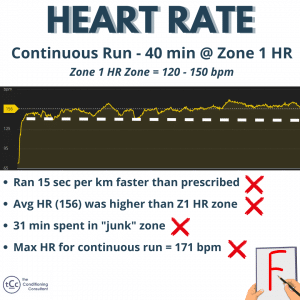
Figure 1 – Example of a commonly completed continuous run, which was completed incorrectly and not as prescribed.
The fact that most runners complete “easy runs that aren’t easy” is compounded by the fact that this type of training results in sub-optimal aerobic fitness adaptation and running performance improvement. This is underpinned by the fact that the intensity for the continuous runs is not high enough to meet the physiological requirements for aerobic fitness adaptation. Scientific research highlights that HIIT is the most optimal training type when targeting aerobic fitness improvement, as when prescribed accurately and effectively it enables runners to maximise time spent at high heart rates (i.e. >90% HRmax). This maximises aerobic fitness and running performance improvement.
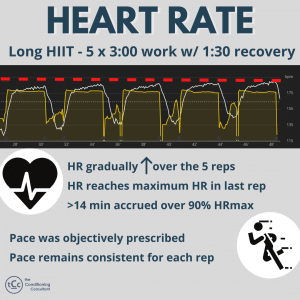
Figure 2 – Example of a successfully completed HIIT session.
4. Inconsistent training & no training structure
Evidence suggests that a significant number of injuries sustained by runners are caused by training program and training load errors. Anecdotally, the most common training errors that I observe with recreational runners include inconsistent training, and a misapplication of the training variables that underpin effective training prescription.
Inconsistent or infrequent training results in unnecessary soreness (aka delayed onset muscle soreness), which in turn can adversely impact your ability to run due to excessive DOMS. Obviously, this has an adverse impact on physiological adaptation and running performance improvement. Running consistently is paramount when trying to mitigate DOMS and facilitate aerobic fitness and running performance improvement.
5. Reactive approach to training
Lastly, the abovementioned issues pertaining to a lack of training structure and a misapplication of training programs are a testament to the fact that most runners take a reactive approach to training. As such, they do not seek training program guidance or coaching until it is too late, and at which point they have sustained an injury which prohibits running. Rather, a more proactive approach to running programs should be taken by engaging a suitably qualified and experienced practicioner to prescribe and manage the overarching training program. This is particularly important for runners who are either currently injured, returning from injury or have previously been perennially injured.
Conclusion
In conclusion, it is worth asking the question – how many of the above training mistakes do you make? If you’re keen to discuss a running or strength training program to improve your aerobic fitness, training consistency and running performance, whilst managing and mitigating injury risk, please do not hesitate to contact us.
Nathan